
Universal Pictures’ record-breaking “Wicked: For Good” released in theaters Nov. 21 and drew the largest global debut for a Broadway musical adaptation in history, earning $226 million worldwide and $68.6 million on opening day, according to AP News.
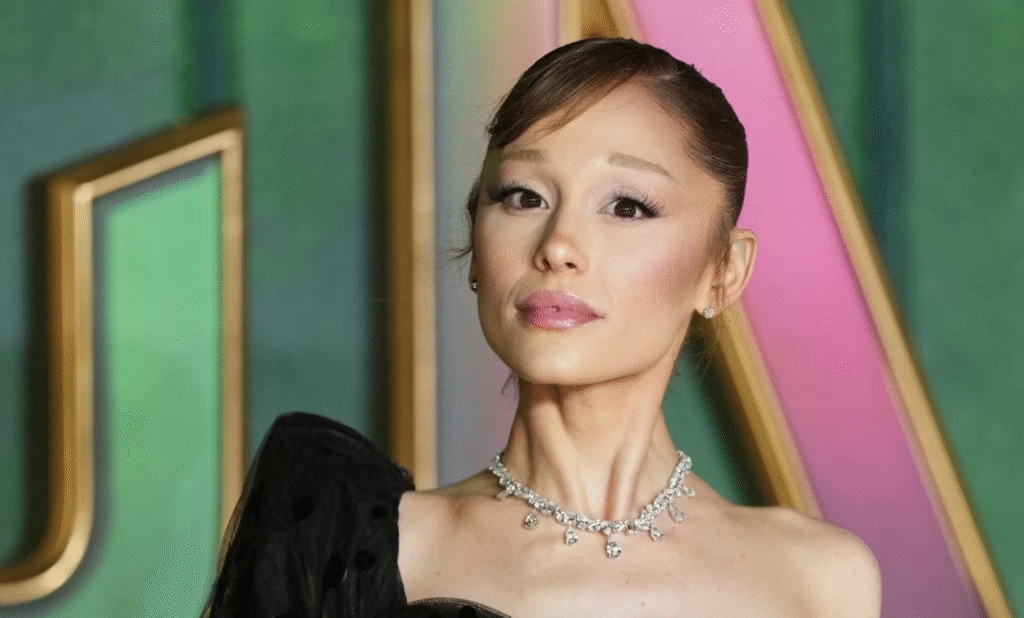
Source: Scott A Garfitt, AP News
As excitement continues, students and faculty are weighing in on whether the hit film is worth watching, and why its message seems to be striking a chord.
“‘Wicked’ is a show that is deeply influential on me as both a scholar and a theatre-maker. I saw it on Broadway four times,” said Dr. Charles Gillespie, associate director of the Performing Arts Program. “I adored the movie because it brought that experience of a live show to life for me. It gave me a chance to see a new version of the ‘Wicked’ story, which is my favorite part of theatre.”
Women made up approximately 71% of the film’s opening-weekend ticket buyers, according to PostTrak exit polls, contributing significantly to its blockbuster success.
“Throughout many storytelling traditions in film, television, theatre and beyond, women tend to be portrayed as enemies or flighty or always talking about men,” said Dr. Rachel Bauer, coordinator of the Bachelor of Arts in Theatre Arts. “‘Wicked’ challenges these portrayals in this challenging [time] of misogynistic portrayals of women in a lot of contemporary media, which is wonderful.”
For students and faculty, the story’s portrayal of friendship is one worth watching for.
“I like the movie’s relationship of Elphaba and Glinda; I think students involved in the arts here at Sacred Heart University really value friendship,” said junior Jack Marzi, Film Club vice president. “It’s an environment where people lift each other, especially during rehearsals, projects and performances.”
As the movie highlights, friendships can evolve in unexpected ways, a message that resonates with audiences.
“Loathing can shift to loving; enemies can become friends; mistakes can be forgiven,” said Gillespie. “It tells a great story about how we can love spectacle and that everyone, no matter how different, can be loved.”
Bauer echoed the importance of the progression in character dynamics.
“I really appreciate the depth of character and the robust friendship journey that is depicted in ‘Wicked’. It definitely passes the Bechdel test,” said Bauer.
“Wicked” has already sparked engagement on campus. The Office of Student Involvement hosted a pink-or-green “sip stop” event in collaboration with First-Year Programs to celebrate opening day.
“Students who follow both our accounts on Instagram, @shu.involvement and @shufirstyearprograms, were able to enter a raffle for a movie-themed prize,” said Katherine Morovich, director of First-Year Programs. “This was a chance for both offices to collaborate and spread some joy on the opening day of ‘Wicked: For Good.’”
Students who saw the film say it’s a blend of theatrical roots and cinematic storytelling made it stand out.
“What stood out to me the most was how intentionally the film blended theatricality with cinematic language,” said Marzi. “The plot, technical aspects and music shaped my emotional reaction to the story because they all worked together to make the film feel both exciting and grounded.
According to PostTrak, 83% of audiences said that they would “definitely recommend” the film to friends, with a 92% overall positive score.
“I genuinely was sucked into the movie. I am a big ‘Wicked’ fan, and I loved how beautiful the background was and how detailed everything was,” said sophomore Kelly Aspras. “The soundtrack was fantastic, and I’m really glad they didn’t ruin the musical-theater experience by changing the songs.”
Even those who aren’t typically musical fans seem to be connecting to the story.
“My brother isn’t a big musical fan and thought the movie was very good, so even if you’re not a fan of musicals, I would still give it a try. His girlfriend loved it so much, and she cried because of the ending,” said Aspras.
Faculty say the film’s two-part structure may reflect a larger industry shift.
“I think the two-part adaptation speaks to how film creators want to take their time telling a story fully, instead of rushing to fit it into less than three hours,” said Bauer. “Audiences definitely appreciate the character growth and careful storytelling, so I think we will continue to see this format for future film adaptations.”
Apart from the film’s celebration of friendship and diversity, Gillespie emphasized a deeper message about moral courage
“Maybe we need to spend less energy on fearing being canceled for standing up for the common good, and spend more energy on ‘defying gravity’ that holds us back from doing what is right,” said Gillespie.
For Gillespie, themes of the story also mirror the experience of being an educator.
“We need to be willing to ask hard questions and play a bit more. But also to cherish the time we have together. ‘Because I Knew You’ is how I think about teaching,” said Gillespie. “Any class, any element of the Pioneer Journey, can be a chance to be ‘changed for good.’”


