The National Basketball Association (NBA) All-Star Weekend 2026 was the league’s latest effort to revive the competitiveness and excitement that once defined the event. Mailroom Clerk Whitney Taylor said the biggest differences from past years have been competitiveness and the absence of social media.
“The All-Star Game meant more to the players before, because they earned their spots,” said Taylor. “It used to be a time when athletes would show off their new merchandise.”
All-Star Saturday on Feb. 14 featured the three-point contest and the slam dunk contest.
Portland Trail Blazers star Damian Lillard won the three-point contest with 27 points in the opening round and 29 in the final. Lillard suffered a torn Achilles during last season’s playoffs and has not played this season, but he received special approval to compete. Keshad Johnson of the Miami Heat won the slam dunk contest scoring a 49.6 on his first dunk and a 47.8 on his second.
Compared to years past, some were still unimpressed.
“Saturday was a snoozefest,” said junior Benjamin Toy. “The only thing they have going for them is the three-point contest.”
Toy said NBA Commissioner, Adam Silver, is “in hot water” and needs to continue making changes to keep All-Star Weekend relevant.
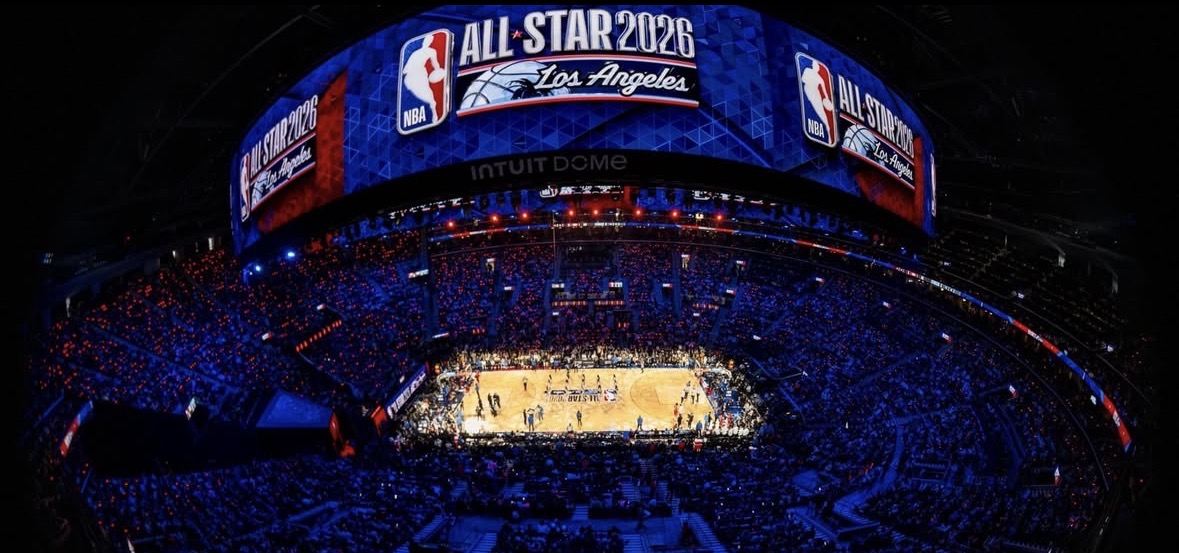
On Feb. 15, the first All-Star Game under the new format took place. For decades, the format was simple: 12 players from each conference competed in an East vs. West matchup. In 2018, the NBA shifted away from this and instead allowed the two players with the most All-Star votes to draft their own teams.
Source: Instagram, @gentilstaa
After introducing a target score in 2020 to encourage competitive play, the league returned to the traditional format in 2024. Last season, they replaced the single game with a mini tournament featuring a Rising Stars team.
This season, the league replaced the Rising Stars team with a USA vs. World format featuring three teams of eight players, two of American-born players and one of international players. The teams competed in 12-minute games, with the top two advancing to a championship.
“The changes make it too much to keep up with and all these games tire out the players,” said Taylor.
The first All-Star Game of the new format between Team World and Team Stars required overtime. Team World went on an early 14-2 run behind San Antonio Spurs star Victor Wembanyama, but Team Stars wasn’t fazed. Anthony Edwards of the Minnesota Timberwolves led them with 13 points, including a 3-pointer to force overtime. In overtime, Scottie Barnes secured the win with a clutch 3-pointer.
“The games were actually good,” said Toy. “Wemby was a real tone setter. I’m happy the players are playing harder.”
In the second game between Team Stars and Team Stripes, it came down to the wire again. Edwards gave Team Stars the lead with 19.5 seconds remaining, until De’Aaron Fox of the Spurs hit a game-winning 3-pointer at the buzzer, giving Team Stripes a two-point victory.
“Actual competition is fun to watch,” said freshman Matt Barry. “I had no idea it was only one quarter, but it was a great finish.”
Team Stripes started hot in the third game against Team World, as Los Angeles Clippers star Kawhi Leonard went 5-for-5 from 3-point range in the first seven minutes. Wembanyama missed with a chance to force overtime, setting up an all-American championship. In the final game, Team Stars defeated Team Stripes 47-21. The younger Stars appeared fresher and controlled the game throughout, as Edwards earned All-Star Game MVP honors.