In the rules of baseball, the home plate umpire’s word has always been what was listened to. If a pitch was called a strike, it would be a strike, no matter if the ball was actually in the strike zone or not.
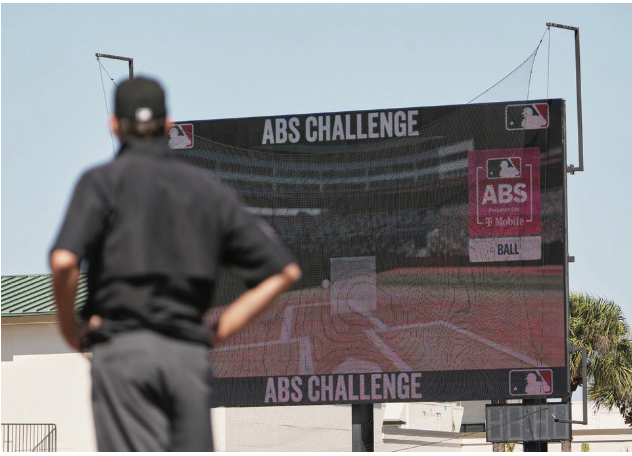
This upcoming Major League Baseball (MLB) season, there is a new component being added to the game of baseball, known as the Automated Ball-Strike (ABS). When a pitch is thrown, the batter can tap their head, implementing what is known as hawk-eye technology to display if the pitch was really a ball or a strike.
“At least we’re not completely switching to robot umpires,” said sophomore Edward Dunn. “ABS does add a level of fairness and accountability to umpires without fully getting rid of them, along with a good risk-to-reward aspect to the game as well.”
Source: Jeff Roberson, AP Photo
When a batter challenges the pitch, there is a 2D view of the location of the pitch within the strike zone. If the challenge is successful, the team keeps their challenge. If not, they lose the ability to challenge a pitch.
“It ruins the game,” said junior James Schindler. “Umpiring is one of the most important parts of the game. Lessening that aspect could lead to them being completely gone within the next ten years.”
The most surprising part of this switch is the drama within the fan experience. People like Schindler fear “robot umps” in the coming years for the sport.
To prevent any cheating from the dugouts during the game, ABS has even changed how games are being broadcasted. According to MLB.com, Major League Baseball requires broadcasts to initiate a nine-second delay on the display of the result of a called challenge on the field by a player, making sure the challenge is performed from the batter himself and not a tip from a video coordinator.
In addition, broadcasts will need to show how to display how many remaining challenges a team has left in the game.
“Do they keep it on the score bug the entire game? Do they rotate it in the score bug once a half inning? That’s a choice they’ll need to make,” said Prof. John Barnes.
The ABS is not just about getting the call right. It is about holding in-person umpires accountable in real time, proving that they are almost never going to be perfect.
“At the same time, umpiring has become an issue in MLB. The accountability aspect of the new ABS system absolutely ensures accountability, so we’ll see as time goes on,” said Schindler