At Sacred Heart University, the Criminal Justice Club provides students with an opportunity to explore the field of criminal justice outside of the classroom. Through a mix of discussion, guest speakers, and hands-on activities, the organization aims to give members a more practical understanding of how the justice system operates.
Source: Abigail Walsh, Sacred Heart University
According to faculty advisor Dr. Analisa Gagnon, the club is intended as “a place for anyone interested in crime, the criminal justice system, and social justice” to come together and engage with topics from an academic perspective. Its mission centers on exposing students to professionals in the field while also offering opportunities to gain applied knowledge, something that complements traditional coursework.
The club follows a consistent meeting schedule, gathering biweekly on Tuesdays at 7:30 p.m., with minor adjustments for holidays. This regular structure allows students to attend as their schedules permit, making the organization accessible even for those with other academic or extracurricular commitments.
Importantly, membership is open to all undergraduate students, not just those studying criminal justice. In fact, Gagnon noted that previous executive board members have come from a variety of academic backgrounds.
Senior Abbi Walsh, the club’s president, explained that the organization, established in 2021, was built with inclusivity in mind.
“Any undergraduate student can join,” said Walsh, emphasizing that the club is designed to appeal to anyone with an interest in the field, regardless of major.
Meetings are intentionally flexible in structure, reflecting the wide range of topics within criminal justice. Some sessions focus on organizational updates, while others incorporate interactive or educational components.
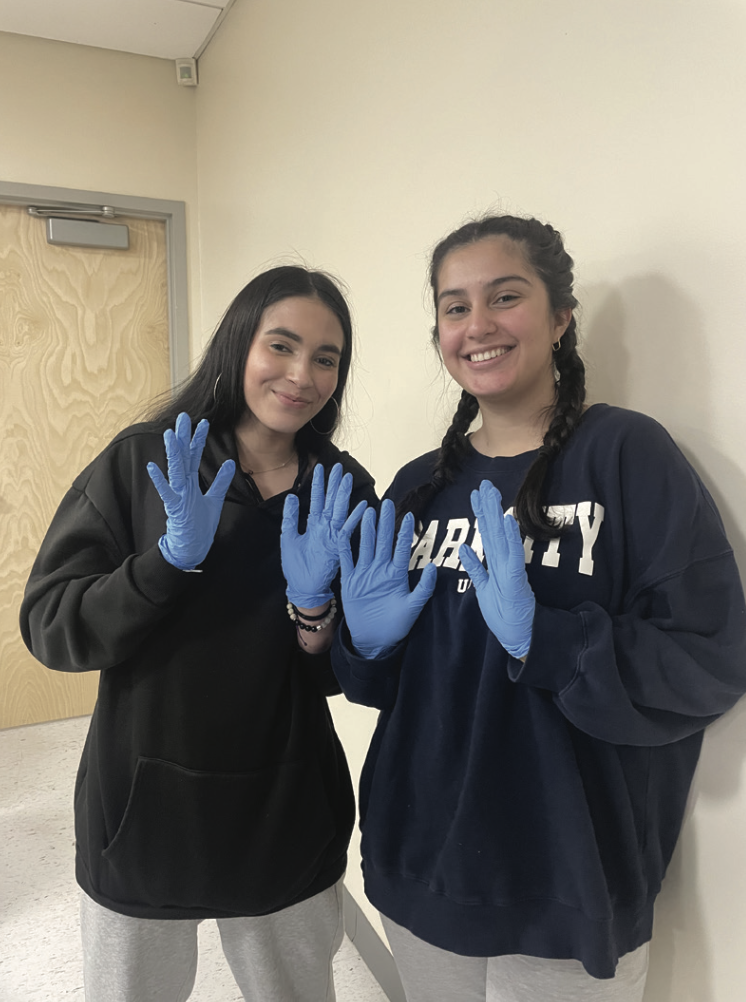
Gagnon explained that meetings may include activities such as fingerprinting, or more immersive exercises where professionals guide students through mock crime scenes. This variability allows members to engage with both theoretical and practical aspects of the discipline.
Vice President junior Kylie Handrahan described meetings as typically involving either presentations on topics within the field or hands-on activities like blood spatter analysis. These exercises are designed to provide a clearer understanding of investigative techniques and procedures.
In addition, the club regularly incorporates case studies and discussions of current events, helping students connect classroom concepts to real-world scenarios.
Beyond weekly meetings, the club hosts a variety of events throughout the academic year. These include programming tied to campus initiatives such as Social Justice Week, as well as guest speaker events featuring professionals from different areas of criminal justice.
Past speakers have addressed topics ranging from violence and criminal behavior to career pathways within the field. The club also hosts an annual mock crime scene event led by a Waterbury crime scene investigator, offering students a more immersive learning experience.
While hands-on opportunities currently center around these on-campus activities, there are ongoing efforts to expand. Gagnon noted that the club is working to increase guest speaker appearances and explore the possibility of adding trips or additional experiential learning opportunities in the future.
From a student perspective, the club serves as a bridge between theory and practice. Club member junior Angelina Catino described the organization as “a mix of educational discussions, guest speakers, and hands-on experiences” that help students better understand what working in the field is actually like. She explained that participating in the club has made the subject feel more practical, particularly through exposure to professionals and real-world case discussions.
In terms of career preparation, the club offers a range of informal benefits. By connecting students with professionals and providing insight into different career paths, it helps members better understand their options within criminal justice.
Guest speakers and alumni connections also create networking opportunities, while regular participation in discussions can help students build communication skills and confidence.
Gagnon also pointed to the personal development that occurs within the organization. She has observed leadership skills emerge among students who take on active roles, as well as strong peer relationships forming over time.
While the club’s primary focus is academic and professional exploration, it also provides a collaborative environment where students can engage with shared interests.