“Honestly, I was expecting worse. I was expecting hours or something,” said sophomore and Spectrum staff writer James El-Hage. El-Hage had gone to Florida over Easter break, expecting a nightmare situation caused by the Department of Homeland Security (DHS) shutdown.
The DHS shutdown began on Feb. 14, and, as of publication time, has continued, making it the longest government shutdown in United States history, partial or otherwise. However, Transportation Security Administration (TSA), which is part of DHS and does security checks, received their first paycheck on March 30, based on an executive order by President Donald Trump. This eased waiting times in airports.
“I would say it affected the trip—maybe mentally. The preparation. We got there super early because we didn’t know what to expect,” said El-Hage.
He only ended up waiting an average of 30 minutes at every airport he went to.
The shutdown was caused by a lapse in funding for the DHS, which meant Congress had to agree to reallocate funds for the department. However, deep disagreements regarding the funding for Immigration and Customs Agency (ICE) and Customs and Border Protections (CBP) led to no resolution for the issue being met, thus causing a shutdown of the department.
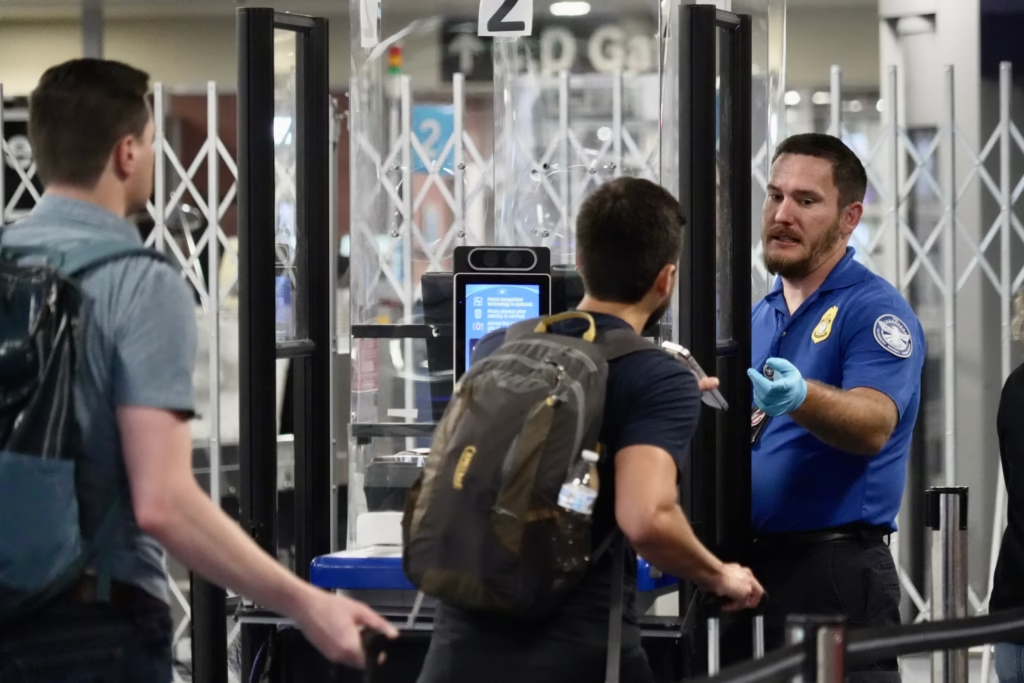
Source; Ty O’neil, AP News
“ICE/CBP have not been directly affected because those agencies are funded through Fiscal Year 2029. But a number of agencies, like the TSA, within the DHS have been seriously affected due to lack of pay. This has resulted in many TSA agents quitting or not coming to work, causing long lines at airports,” said Dr. Gary Rose, professor of political science, chair of the Department of Government, and scholar in residence.
Freshman Jadelynn Garrido sees the shutdown as the result of a failure of ICE’s professionalism.
“I think that the shutdown was a positive thing personally. It’s not the fact that I don’t support border protection, but I don’t support tyranny when it comes to the American citizens,” said Garrido. “I would support funding if it was pumped more into training and effort to catch criminals rather than go after people that are living their lives here.”
However, senior William Kurnick feels that the shutdown is disappointing, and that the average Congress member is paid a tidy sum to stop things like this from happening.
“American people will become tired of it, and politically, it would be wise for either side to start making concessions because the midterms are coming up in the fall. And it’s important to look good for the midterm elections. So, I think those politicians are going to have to make concessions, and both sides are going to have to come to some kind of agreement that meets both their needs,” said Kurnick.
According to AP News, Senate Majority Leader John Thune and Democratic leader Chuck Schumer of New York settled on a deal: It would not include funding for the U.S. Immigration and Customs Enforcement and for U.S. Border Patrol, and would set aside Democratic demands for new limits on the agencies.
However, House Speaker Mike Johnson threw out the deal, calling it a “joke.”
The issue lies in the split between Senate and House. While the Senate Republicans had agreed to the terms of the deal with the Senate Democrats and were able to come to a deal, when the bill moved to the House a far-right bloc of Republicans known as the Freedom Caucus blocked it, moving the issue back to the Senate.
“I don’t think it’s going to reopen anytime soon, because if Democrats or Republicans can’t come to an agreement, there’s no chance for it to open back up,” said Garrido.
“I don’t know what the path is for them. Considering both sides are really steadfast in what they want to happen, right? Whether it’s ICE reforms or a continuance of funding or changes to the funding. It seems like neither side is really letting up,” said Kurnick.
As of publication time, the Senate is set to meet on April 13 where a new deal to resolve the shutdown could be struck.
“No party emerges victorious during a shutdown. Nobody wins. The American people are almost equally divided, based on party affiliation, as far as assigning blame—a further reflection of the polarized state of American politics and society,” said Rose.