“One Dance” by Drake is playing through your friend’s cracked iPhone 6. You blink, and suddenly it’s 2026. As the calendar flipped to a new year, social media feeds began filling with nostalgic vines and filters, making 2026 feel like 2016 again. The trend has gained traction among young adults, who are revisiting what many remember as the cultural “prime” of their childhood.
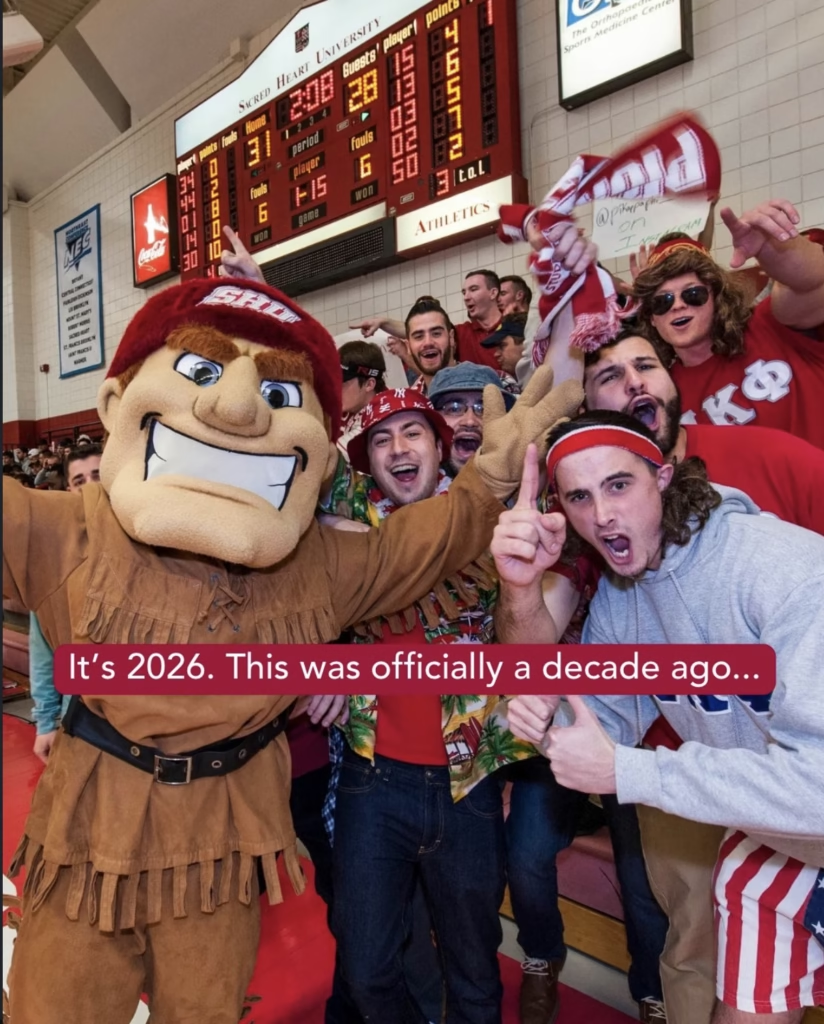
Source: Instagram, @sacredheartuniversity
Many Sacred Heart University students have taken this trend to Instagram, reposting their photos from 2016, often complemented by the staple filters on platforms like Snapchat or VSCO.
The movement has only picked up more traction as the year progresses, with many staple 2016 artists like Diplo and Major Lazer posting old concert footage.
“Whenever I hear Broccoli by DRAM and Lil Yachty, I’m immediately brought back to my middle school days,” said senior Javier Alicea- Kahn.
For others, it is sports moments that define the year. No matter which team you supported, the generational highlights of 2016 were impossible to ignore, from Cam Newton dabbing in the end zone to LeBron James’ historic NBA Finals comeback. Depending on who you supported, some sports moments still carry hard feelings for some students.
“I’m still scarred by Von Miller’s Super Bowl 50 performance where he had two and a half sacks and two forced fumbles, which led them to beat the Panthers 24-10,” said senior Connor Gioia.
But what makes 2016 feel so iconic when compared to other years in our childhood? Many students reminisce on the good old days, whether it be the culture or simply still being a kid with far fewer responsibilities.
“It’s hard to compare my life in 2016 with my current life simply because so much has changed. 2016 was definitely less stressful at times, but I also had a different living situation, different friends, and far less freedom,” said Alicea- Khan.
Media theorist Marshall McLuhan famously argued that “the medium is the message,” suggesting that it’s more about how people post about a trend than the trend itself, which often influences how people perceive it. With 2016, currently being shown in this nostalgic limelight, life comes across as simpler than today’s oversaturated media environment.
Whether it be Vine’s six-second loops, Snapchat’s unfiltered stories, and Instagram’s less-curated aesthetic, 2016 created a digital environment that felt more spontaneous and unserious when compared to today’s algorithm-driven feeds that feel overly polished or completely AI-driven.
Still, not everyone is eager for a full aesthetic revival.
“I didn’t even know the 2016 look was coming back,” Alicea-Kahn said. “And I honestly hope it doesn’t.”
Whether the return of 2016 reflects a genuine longing to go back in time or just a lighthearted internet trend, the resurgence highlights how students choose to remember growing up. For those looking for an extra dose of nostalgia beyond their social media feeds, the official Spectrum 2016 throwback playlist is available on Spotify.