
When Bad Bunny steps onto the Super Bowl halftime stage, it won’t just be another performance in a long list of iconic shows. It will carry history — the kind that settles in your chest and reminds you who you are, where you come from, and what you can become. For Puerto Ricans everywhere, this moment is bigger than music; it’s cultural validation, pride, and affirmation on the biggest stage in the world.
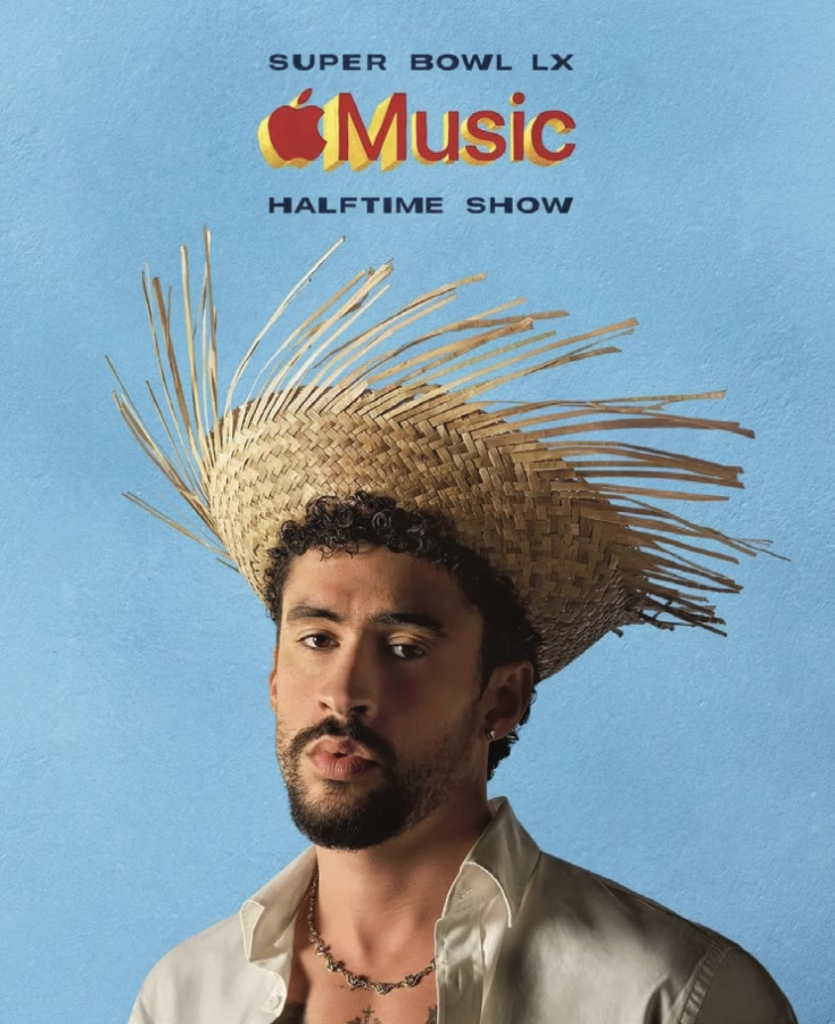
Source: Instagram, @applemusic
Just last Sunday night at the 68th Annual Grammy Awards, Bad Bunny made history by winning Album of the Year for Debí Tirar Más Fotos — the first time a Spanish-language album has ever taken home that top honor. He spoke mostly in Spanish. He spoke about immigrants. He spoke from the heart. There was no attempt to soften his words or translate his identity for comfort. He stood fully in his truth — Puerto Rican, emotional, unapologetic — and the world listened. That alone felt monumental. And now, just days later, he’s preparing to headline the Super Bowl LX Halftime Show, a cultural platform that reaches millions of viewers and defines moments in American pop culture.
What makes this moment hit so deeply is knowing where his journey began. Before the awards, before the sold-out stadiums and global recognition, Benito Antonio Martínez Ocasio worked as a cashier and bagger at a grocery store in Vega Baja. He scanned items and clocked in, living a life many overlook, while quietly making music in his free time. There were no guarantees. Just effort, belief, and the sound of Puerto Rico in his veins. That part of his story matters because so many Puerto Ricans — whether on the island or in the diaspora — know what it feels like to work jobs that don’t come with applause and to carry big dreams quietly, passionately, and persistently.
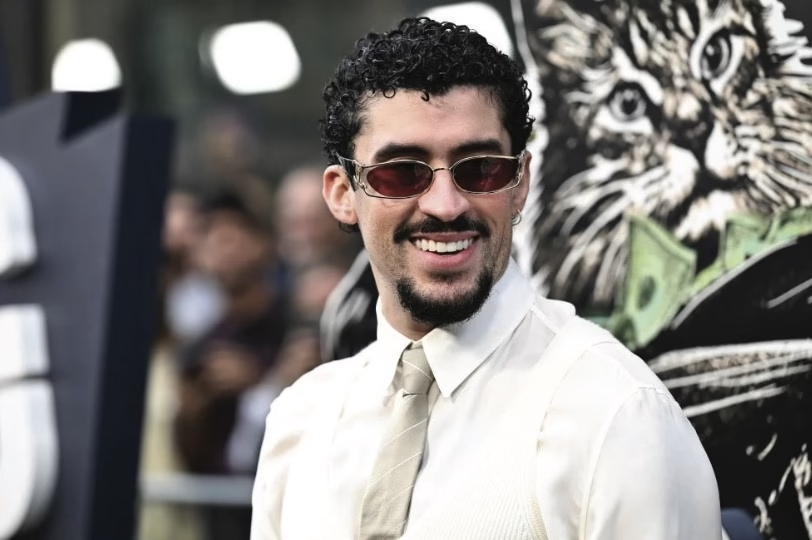
Source: AP Photo, Evan Agostini
That persistence led him home to Puerto Rico in one of the most powerful ways an artist can return. His residency in San Juan — No Me Quiero Ir De Aquí — wasn’t just a concert series. It was a tribute to his roots. The staging included la casita, plantain trees, and imagery that evoked the rhythms of island life. In spaces where history, landscape, and everyday culture intersect, he created a celebration of Puerto Rican identity on his own turf. That residency wasn’t just a show; it was a statement: “This is where I come from, and I’m proud of it.”
From there, his influence only expanded. He’s now in the middle of a world tour that’s selling out arenas across the globe, bringing his sound and his message to millions of fans in cities far from Puerto Rico. Each night, he carries the spirit of Borinquen with him — the rhythms of bomba and plena, salsa, the pride of Spanish lyrics, the authenticity of someone who never forgot his roots even as the world chased him. They cheer. They dance. They listen — and maybe for some, they’re hearing something they’ve never heard on such a scale before: an artist who doesn’t trade his identity for acceptance.
For me, as a Puerto Rican from New York, this moment feels incredibly personal. Growing up in the diaspora means balancing two worlds — English outside, Spanish at home, American life under your feet, Puerto Rico in your heart. It means loving an island you may not see every year, carrying stories of calypso sunsets, the sound of the coquí at night, the echo of bomba drums, domino tables on the corners and in the plazas, car speakers blasting reggaetón, and an island that never leaves you. It means feeling pride that the world doesn’t always recognize until someone like Bad Bunny brings it into the spotlight. Watching his rise feels like watching our communities rise with him — the ones that were always there, even when they weren’t always acknowledged.
This Super Bowl halftime show is historic not just because of who is performing, but because of how he performs. Bad Bunny doesn’t erase his roots to fit into mainstream culture. He brings them with him — Spanish lyrics without apology, Caribbean soundscapes, imagery that feels like home. That matters. It tells young Puerto Ricans and Latinos — on the island and around the world — that they don’t need to shrink themselves to belong.
For Puerto Ricans everywhere, this is validation. It’s proof that our culture is powerful, our language is worthy, and our stories deserve space. We come from people who turned pain into rhythm, who survived literal and figurative storms, who found joy in music even when life felt heavy. That resilience lives on in moments like this.
When Bad Bunny takes that stage, I won’t just be watching an artist perform. I’ll be watching a reflection of what it means to be Puerto Rican and to be Latino — to stay proud, and never forget where you came from, no matter how far you go. From grocery store aisles to Grammy stages to the Super Bowl, his journey mirrors the perseverance of our people.
This isn’t just a halftime show. It’s a heartbeat. And this time, the world is finally listening.
¡Pa’lante, Borinquen!
Tune in to Super Bowl LX this Sunday, Feb. 8th at 6:30 p.m. on NBC and streamed on Peacock.


